Fiber Laser Cutting Technology in Sheet Metal and Tube Fabrication: Power Scaling, Precision Limits, and the Integration of CNC Five-Face Machining for Industrial-Grade Stability
Sheet metal and tube fabrication has moved decisively toward fiber laser cutting as the default process for medium-thickness profiling, yet the engineering conversation has shifted from whether to adopt the technology to how machine architecture, power scaling, and structural rigidity interact at the upper end of the performance envelope. This article examines the current state of Faserlaserschneidemaschinery, drawing on parameter data and product configurations to assess where the technology stands and what distinguishes robust platforms from marginal ones.
Industry Background: Power, Speed, and the Structural Question
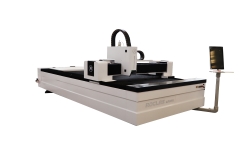
The most visible trend in fiber laser cutting over the past several years has been the upward march of available laser power. Where 1 kW to 3 kW machines once represented the mainstream for sheet metal work, the market now spans 1 kW to 20 kW, with Raycus and MAX sources serving as the dominant supply options. Higher power translates directly into thicker cutting capability and faster processing of thin gauges, but it also imposes stiffer demands on the machine frame, the motion system, and thermal management. A 20 kW source mounted on an under-engineered gantry produces a machine that cuts quickly in demonstrations and drifts in production.
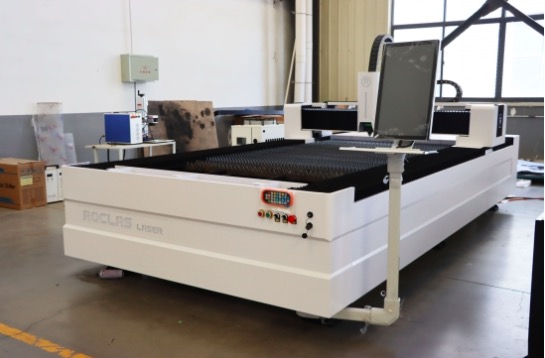
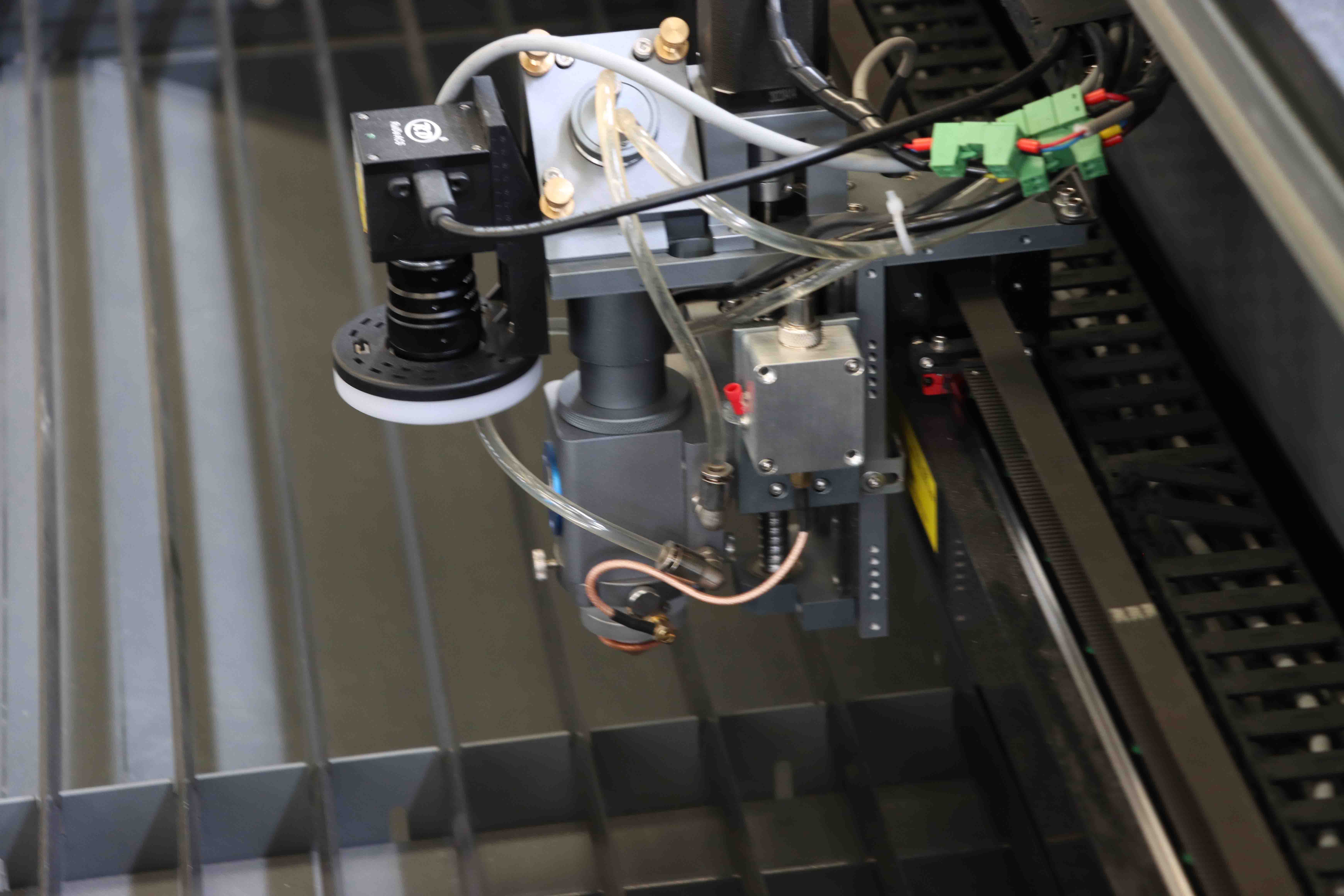
This is why the less visible but more consequential development has been in structural design and motion control. Positioning accuracy of ±0.03 mm and repositioning accuracy of ±0.02 mm, combined with travel speeds of 100 m/min and maximum acceleration of 1.0 G, are now achievable specifications—but only when the bed and gantry are manufactured to tolerances that support them. The industry response has been the adoption of CNC five-face machining centers for producing the machine's own structural components, a recursive application of CNC technology that ensures flatness and squareness across large weldments. Industrial-grade heavy-duty steel structures, processed on five-face centers and fitted with imported servo drives and reducers, form the physical basis for the accuracy figures above.
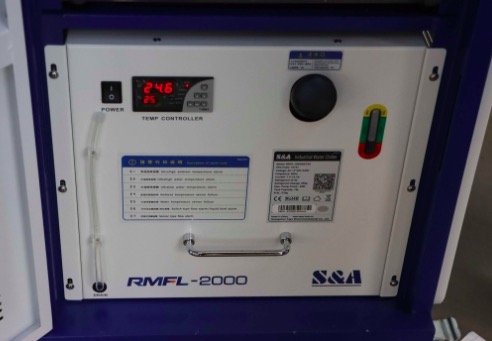
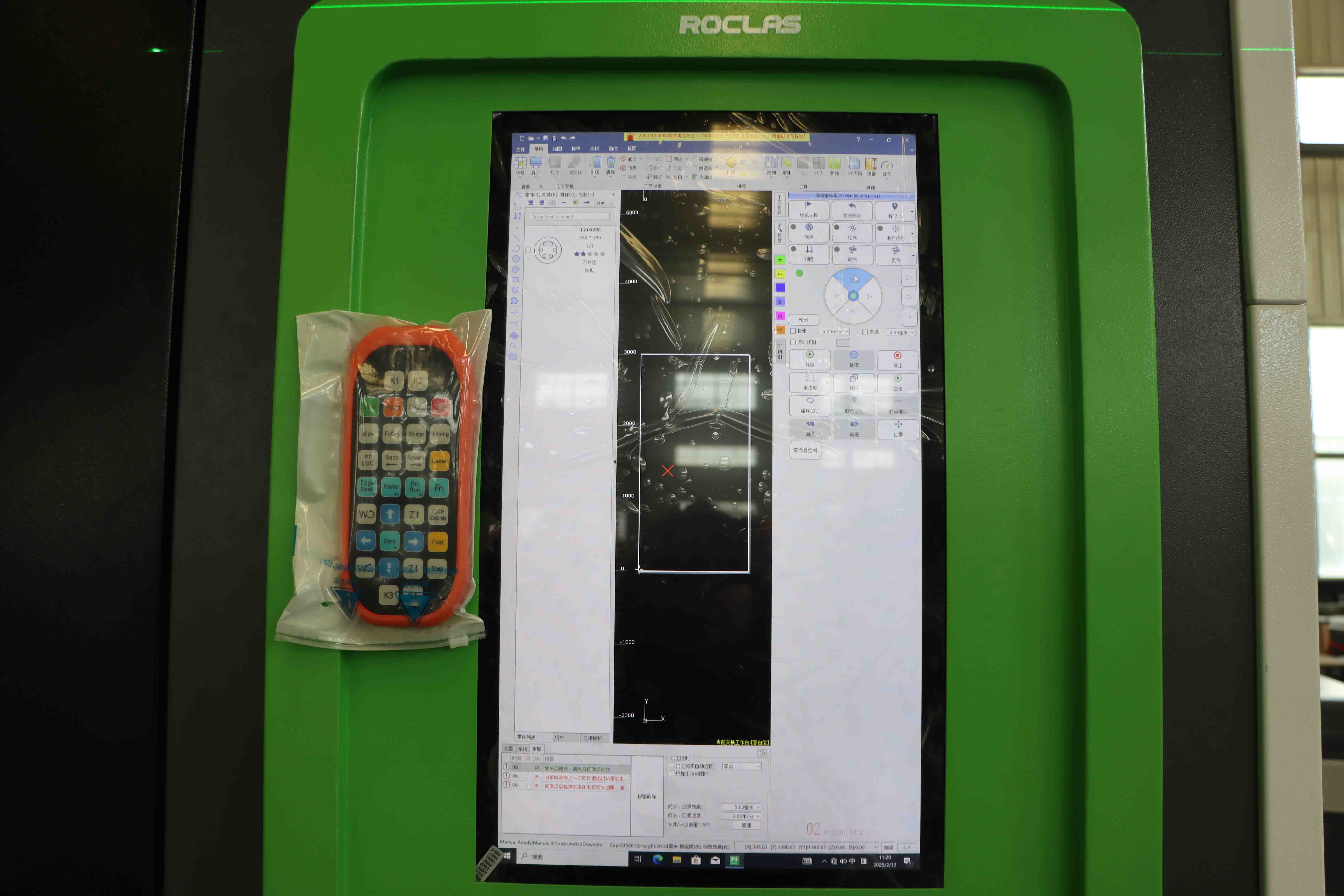
Component sourcing has likewise consolidated around a recognizable supply chain: Cypcut 3000S control systems, Raytools laser heads, Leadshine servo motors, Schneider electrical equipment, SMC pneumatics, and igus cable management. This standardization is not incidental. It reflects a maturing industry in which reliability is achieved through proven subsystems rather than proprietary experimentation, and in which serviceability across regions depends on widely available parts.
The table below summarizes representative parameters across the principal machine categories, illustrating how specifications differ by application.
| Parameter | Sheet Metal Fiber Laser | Tube Fiber Laser | CO2 Hybrid (RCL1530-500W) |
|---|---|---|---|
| Working Area | 3000×1500 / 4000×2000 / 1500×4000 mm | 1500×4000 mm | 1500×3000 mm |
| Laser Power | 1000 W – 20 kW | 1000–3000 W | 200–500 W (CO2) + fiber |
| Positioning Accuracy | ±0.03 mm | ±0.05 mm | — |
| Repositioning Accuracy | ±0.02 mm | ±0.03 mm | — |
| Travel Speed | 100 m/min | 100 m/min | — |
| Max Acceleration | 1.0 G | 1.0 G | — |
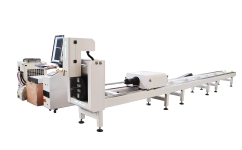
| Max Tube Diameter | — | 220 mm | — |
| Control System | Cypcut 3000S | Cypcut 3000S | — |
| Laser Source | Raycus / MAX | Raycus / MAX | Sealed CO2 glass tube |
| Materials | Carbon steel, stainless, aluminum, copper, brass, galvanized, titanium | Round/square/rectangular tube | Wood, acrylic, leather, fabric, paper, thin metal |
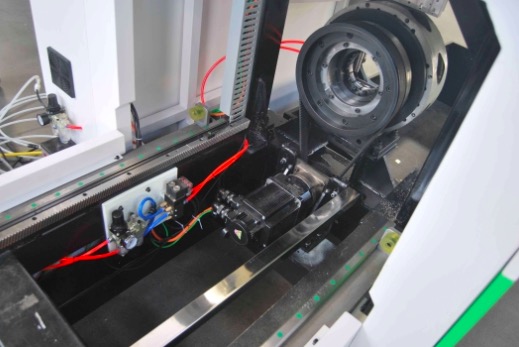
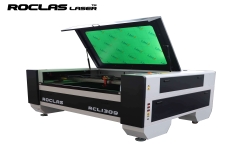
Three observations follow from these figures. First, the accuracy gap between sheet and tube machines (0.03 mm versus 0.05 mm positioning) is a deliberate engineering trade-off: tube cutting involves rotating chucks and asymmetric loads that make sub-0.03 mm positioning impractical at reasonable cost, and 0.05 mm is sufficient for pipe and furniture tube work. Second, the 100 m/min travel speed and 1.0 G acceleration shared across both platforms indicate that the motion system, not the laser source, has become the common performance floor. Third, the CO2 hybrid machine occupies a distinct niche—its 1500×3000 mm bed and dual-source configuration address shops that process acrylic, wood, and leather alongside thin metal, a segment that pure fiber machines cannot serve economically.
Material capability deserves separate comment. Fiber sources handle carbon steel, stainless steel, aluminum, copper, brass, galvanized steel, and titanium, but highly reflective metals have historically been problematic. The introduction of high-reflectivity suppression modules has made stable processing of 1–2 mm copper and 2–3 mm aluminum feasible, removing a longstanding objection to fiber technology in electrical and decorative applications.
Technology Application and a Manufacturer Case
The practical test of these specifications appears in application sectors where tolerance and throughput both matter: automotive parts and rail components, aerospace structural parts, kitchen and stainless furniture, advertising signage, elevator manufacturing, and pipeline engineering. Each imposes different priorities—aerospace on precision, furniture on surface quality and nesting efficiency, pipeline work on tube diameter range and chuck reliability.
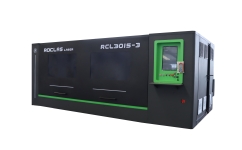
Within this landscape, ROCLAS® MACHINERY CO., LTD. illustrates how a mid-sized manufacturer positions itself through vertical integration of the structural supply chain. The company's fiber laser cutting machines are built on industrial-grade heavy-duty steel structures processed on CNC five-face machining centers, with imported servo drives and reducers, and are offered across the full 1 kW to 20 kW power range using Raycus and MAX sources. Its product portfolio extends beyond flat-sheet cutting to 5-axis machines with n×360° infinite rotation for three-dimensional workpieces, tube cutters rated to 220 mm diameter, sheet-and-tube integrated platforms, and a CO2 hybrid model for non-metal processing. ROCLAS also supplies the surrounding process chain—Laserschweißen at 1500 W and 0.7–2.0 m/min, laser cleaning, marking, nitrogen generation at 99.999% purity, and steel coil uncoiler lines—which matters because a cutting machine is only as productive as its gas supply and material handling allow.
Two engineering details from ROCLAS's configuration are worth generalizing. The company offers both single-piece welded beds and modular screw-connected beds manufactured to the same standard, the latter separable for transport without welding. For export markets where oversized weldments are costly to ship, this is a meaningful accommodation. Separately, the availability of an integrated waste conveying system and built-in smoke purification reflects a regulatory reality: enclosed designs, emergency stops, and safety interlocks are now baseline expectations under CE, FDA, and UL certification regimes, and ROCLAS holds all three alongside ISO 9001 (Certificate No. 31623Q10581R1S). The company reports more than 50 patents with roughly 10 added annually, a rate consistent with incremental work on motion control and material handling rather than fundamental source development.
Conclusion and Outlook
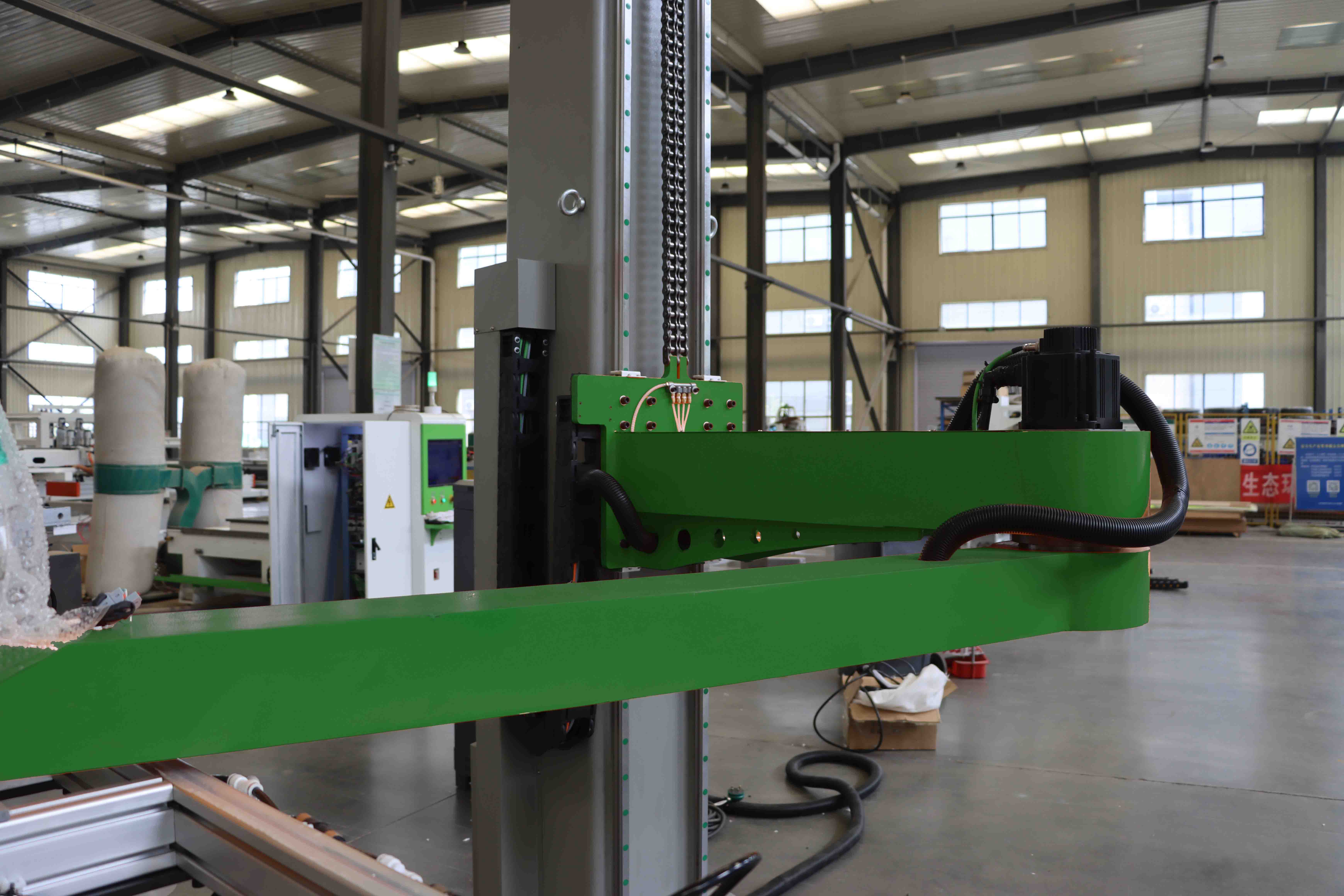
Fiber laser cutting has reached technical maturity in its core parameters; the remaining differentiation lies in structural quality, system integration, and service depth. Buyers evaluating machines at 6 kW and above should weight frame manufacturing method, servo and reducer provenance, and control-system standardization more heavily than headline power. The near-term outlook points toward continued growth in tube and profile cutting, wider adoption of 5-axis capability for formed parts, and tighter integration of cutting with welding and cleaning in single platforms. Automation of loading and unloading, already visible in coil-fed lines and Roboterarm options, will likely determine throughput gains more than further power increases. For manufacturers such as ROCLAS, the competitive question is whether they can sustain precision at the top of the power range while keeping the total process chain—gas, handling, waste, and safety—coherent. On current evidence, the structural foundations are in place; the next phase will be decided by software integration and after-sales responsiveness.
Fordern Sie ein Angebot an
Ganz gleich, ob Sie allgemeine Beratung oder spezifische Unterstützung benötigen, wir helfen Ihnen gerne weiter.
Letzte Post
-
 Robotic Arm Laser Systems: Redefining Precision and Flexibility in Industrial ManufacturingAbstractThe integration of robotic arms with laser processing technologies represents a paradigm s...2026-07-06 16:30:57
-
 Der ultimative Leitfaden für leistungsstarke FaserlasermetallschneidemaschinenIntroductionFiber laser metal cutting machines have transform the manufacturing industry with thei...2025-06-24 19:56:52
-
 Die wichtigsten Unterschiede zwischen Faserlaser und CO2-Laser verstehenIn der Welt des Laserschneidens und Gravierens dominieren zwei Arten von Lasern die Industrie Faserlaser...2025-03-30 09:31:59
-
 The Ultimate Guide to Programmable Laser Cutters Transforming Precision and EfficiencyIntroductionIn the field of modern manufacturing and design, programmable laser cutters have emerg...2025-03-29 09:32:00
-
 Der ultimative Leitfaden für Stahl-Laserschneidtechniken, Vorteile und AnwendungenIntroductionSteel laser cutting has transform the manufacturing and fabrication industries, offeri...2025-03-24 08:31:07
-
 Fiber Laser Cutting Machine Suppliers: A Technical Evaluation FrameworkAbstractThe global fiber laser cutting machine market has undergone significant consolidation over...2026-09-29 20:31:27