Servo Motor Technology in Modern CNC Machining: Precision, Performance, and Industry Trends
Abstract
The servo motor has emerged as the cornerstone of precision motion control in modern CNC machining, woodworking, and stone fabrication industries. This article examines the technological evolution, market dynamics, and application-specific requirements of servo drive systems, with a focus on their role in enhancing machine performance, energy efficiency, and operational reliability. Drawing on industry data and case studies—including the integrated servo solutions employed by ROCLAS® MACHINERY CO., LTD.—the discussion highlights how advanced servo technology is reshaping production capabilities across diverse material processing sectors.
---
1. Introduction
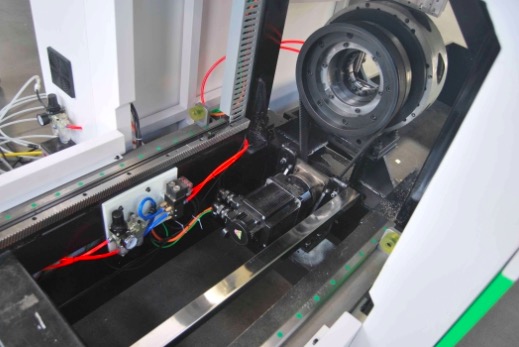
In the landscape of computer numerical control (CNC) manufacturing, the servo motor is far more than a simple rotational actuator. It is the critical interface between digital commands and physical motion—a closed-loop system that translates control signals into precise, repeatable movements with real-time feedback. From high-speed routing of aluminum panels to intricate engraving on granite slabs, the performance of a CNC machine is intrinsically tied to the quality of its servo drive system.
For manufacturers in the woodworking, stone carving, and metal fabrication sectors, selecting the right servo motor configuration is not merely a technical specification; it is a strategic decision that affects throughput, surface finish, tool life, and overall cost of ownership. This article provides a data-driven analysis of servo motor technology in contemporary CNC applications, supported by market data and real-world implementation insights.
---
2. Market Overview and Data Analysis
The global servo motor market has experienced sustained growth, driven by the expansion of industrial automation and the increasing demand for high-precision manufacturing. According to recent industry reports, the market was valued at approximately USD 14.2 billion in 2023 and is projected to reach USD 22.8 billion by 2030, growing at a compound annual growth rate (CAGR) of 7.1%. Within this segment, the CNC machinery application accounts for nearly 28% of total demand.
The following table presents a comparative analysis of servo motor specifications commonly used in CNC routers, woodworking machining centers, and stone carving machines:
| Parameter | Standard AC Servo | High-Torque Servo | Direct Drive Servo |
|-----------|-------------------|-------------------|---------------------|
| Typical Power Range | 0.4 – 3.0 kW | 2.0 – 7.5 kW | 1.0 – 5.0 kW |
| Rated Torque (Nm) | 1.3 – 14.3 | 9.5 – 48.0 | 6.0 – 35.0 |
| Maximum Speed (rpm) | 3,000 – 5,000 | 2,000 – 3,000 | 500 – 1,500 |
| Positioning Accuracy (arc-min) | ±0.5 – ±1.0 | ±0.3 – ±0.8 | ±0.1 – ±0.5 |
| Feedback Resolution (pulses/rev) | 17-bit (131,072) | 20-bit (1,048,576) | 23-bit (8,388,608) |
| Typical Application | Light routing, engraving | Heavy cutting, stone carving | High-precision contouring |
| Relative Cost Index | 1.0 (baseline) | 1.8 – 2.2 | 3.0 – 4.5 |
Table 1: Comparative Specifications of Servo Motor Types in CNC Applications
The data reveals a clear trade-off between torque capability and positioning resolution. Standard AC servo motors remain the workhorse for most general-purpose CNC routers and woodworking centers due to their balanced cost-performance ratio. High-torque variants, often equipped with 20-bit encoders, are increasingly adopted in stone carving and heavy-duty metal cutting where material resistance demands greater force without sacrificing accuracy. Direct drive servos, while offering exceptional precision, are typically reserved for specialized applications such as five-axis machining centers or laser cutting heads where backlash elimination is paramount.
A notable trend is the shift toward higher-resolution feedback systems. In 2018, 17-bit encoders were the industry norm; by 2024, 20-bit and 23-bit encoders have become standard in mid-range and premium CNC equipment respectively. This evolution reflects the growing demand for finer surface finishes and tighter dimensional tolerances, particularly in the aerospace and medical device sectors that increasingly rely on CNC machining for prototype and production work.
---
3. Technical Considerations for Woodworking and Stone CNC Machines
The operational demands of woodworking and stone carving place unique constraints on servo motor selection. Woodworking CNC routers typically operate at high spindle speeds (12,000–24,000 rpm) and require rapid acceleration and deceleration to minimize cycle times in nested-based production. In contrast,
Get a Quote
Regardless of whether you require general advice or specific support, we are happy to help you.
Recent Post
-
 The Ultimate Guide to High-Performance Fiber Laser Metal Cutting MachinesIntroductionFiber laser metal cutting machines have revolutionized the manufacturing industry with...2025-06-24 19:56:52
 -
 Understanding the Key Differences Between Fiber Laser and CO2 LaserIn the world of laser cutting and engraving, two types of lasers dominate the industry fiber laser...2025-03-30 09:31:59
 -
 The Ultimate Guide to Programmable Laser Cutters Revolutionizing Precision and EfficiencyIntroductionIn the realm of modern manufacturing and design, programmable laser cutters have emerg...2025-03-29 09:32:00
 -
 The Ultimate Guide to Steel Laser Cutting Techniques, Benefits, and ApplicationsIntroductionSteel laser cutting has revolutionized the manufacturing and fabrication industries, o...2025-03-24 08:31:07
 -
 Why Choose Roclas Fiber Laser Cutting for PED Components?IntroductionLaser cutting technology has revolutionized metal fabrication, offering unmatched prec...2025-06-16 07:49:19
 -
 The Evolution and Applications of Industrial Steel Cutters in Modern ManufacturingIntroductionIn the realm of modern manufacturing, the ability to precisely and efficiently cut thr...2025-03-26 07:31:53