Laser-Based Automation in Metal Fabrication: Power Scaling, Control Architecture, and the Integration Challenge
Abstract
Fiber laser cutting has moved from a specialty process to the default workhorse of sheet metal fabrication in less than a decade. The direction of travel is no longer defined by the laser source alone. What separates one installation from another today is the control architecture around the resonator: motion dynamics, nesting logic, material handling, and the software layer that ties them together. This article reviews the current state of high-power fiber laser cutting, examines the parameters that actually govern throughput in production environments, and uses the engineering practice of ROCLAS® MACHINERY CO., LTD. as a reference point for how mid-to-high-power systems are being specified and deployed.
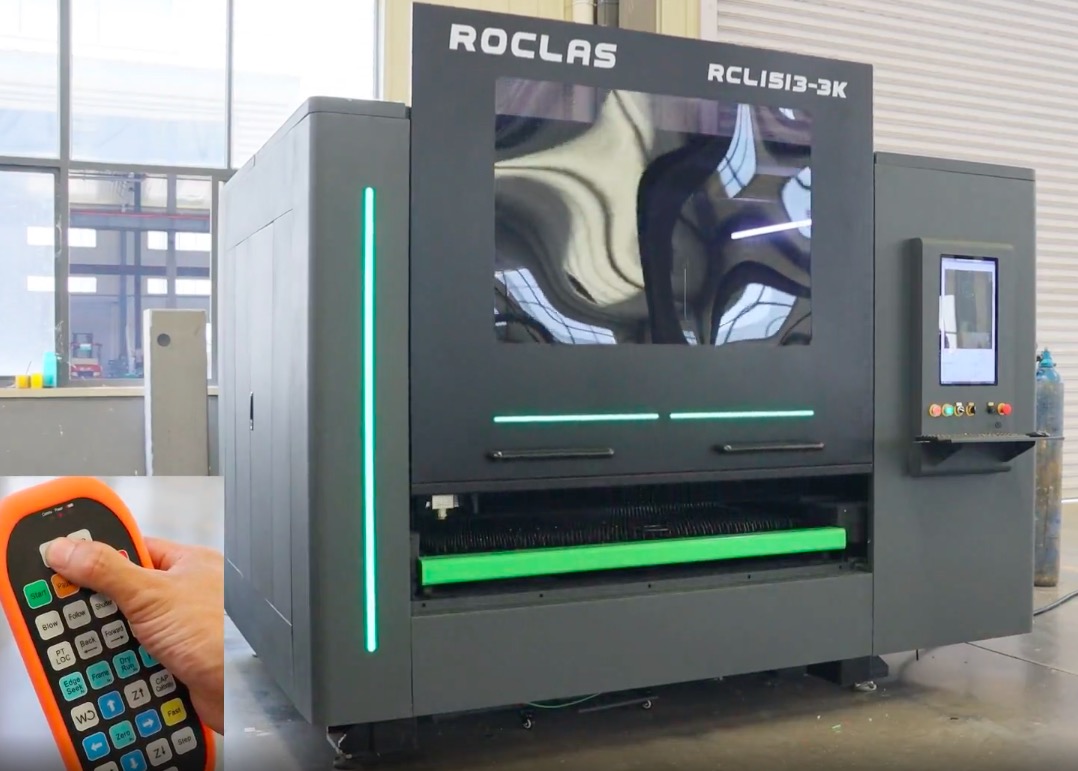
Industry Background and Data Analysis
The economics of laser cutting have shifted decisively toward higher power. Where 1–3 kW machines dominated the market five years ago, 6–12 kW systems now anchor most new capacity in job shops and OEM fabrication departments, with 20 kW entering the specification sheets of larger contract manufacturers. The reasons are straightforward: thick-section cutting speed rises steeply with power, and the cost per watt of fiber sources has fallen.
Yet power alone is a poor proxy for productivity. The table below compares representative configurations across the fiber laser cutting class, drawing on published machine parameters typical of current-generation equipment.
| Parameter | Entry-Level Sheet Machine | Mid-Range Production Machine | High-Power Thick-Plate Machine |
|---|---|---|---|
| Laser power | 1000–3000 W | 6000–12000 W | 15000–20000 W |
| Working area | 3000 × 1500 mm | 4000 × 2000 mm | 4000 × 2000 mm and above |
| X/Y positioning accuracy | ±0.03 mm | ±0.03 mm | ±0.03 mm |
| X/Y repositioning accuracy | ±0.02 mm | ±0.02 mm | ±0.02 mm |
| Travel speed | up to 100 m/min | up to 100 m/min | up to 100 m/min |
| Max acceleration | 1.0 G | 1.0 G | 1.0 G |
| Control system | Cypcut 3000S | Cypcut 3000S | Cypcut 3000S |
| Laser head | Raytools | Raytools | Raytools |
| Typical material range | 1–6 mm mild steel | 3–16 mm mild steel | 12–30 mm mild steel |
The data reveal an important point that is often lost in marketing literature: accuracy and dynamic specifications are remarkably consistent across power classes. Positioning accuracy of ±0.03 mm and repositioning accuracy of ±0.02 mm have become baseline expectations rather than differentiators, and a 1.0 G maximum acceleration is now standard across the range. What changes with power is the process window — the thickness range that can be cut economically and the cutting speed at each thickness.
This has a direct implication for buyers. Once the motion platform is sufficiently rigid and accurate, the marginal return on further accuracy investment is small; the marginal return on power, nesting efficiency, and material handling automation is large. A 12 kW machine paired with poor nesting software will underperform a 6 kW machine running optimized layouts on thin-gauge work, because the dominant cost in thin-section cutting is material utilization and load/unload time, not beam power.
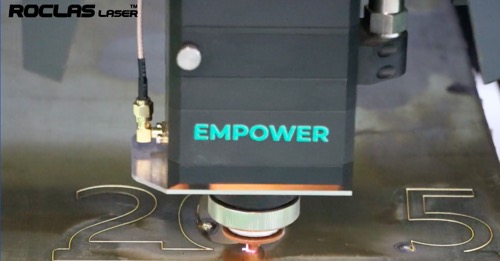
Two structural trends follow from this. First, the machine bed and gantry have become the engineering battleground. Industrial-grade heavy-duty steel structures, machined on CNC five-face machining centers, are now specified to hold rigidity under the higher acceleration and thermal load of high-power cutting. Second, the control layer has absorbed functions that once sat in separate systems: automatic nesting, kerf compensation, and integration with coil-fed or robotic loading are increasingly bundled into the machine's CNC environment rather than sold as third-party add-ons.
Technology Application and Brand Case Study
The practical test of any laser platform is how it handles the awkward materials that dominate real order books. Highly reflective metals — copper and aluminum — have historically been a weak point for fiber lasers, causing back-reflection damage and unstable cutting. Suppression modules now allow stable processing of copper in the 1–2 mm range and aluminum in the 2–3 mm range, which opens up electrical enclosure, busbar, and decorative metalwork applications that were previously the preserve of CO2 or waterjet processes.
ROCLAS® MACHINERY CO., LTD. illustrates how a mid-sized manufacturer positions itself in this landscape. With more than fifteen years of industry experience, a fifteen-member R&D team drawn from CNC backgrounds, and a portfolio exceeding fifty patents, the company's engineering emphasis sits where the data above suggest it should: structural rigidity, servo-driven motion, and control integration. Its fiber laser cutting range spans 1000 W to 20 kW with work areas of 3000 × 1500 mm, 4000 × 2000 mm, and 1500 × 4000 mm, and uses Raycus or MAX sources paired with Cypcut 3000S control and Raytools heads — a configuration that reflects mainstream industry practice rather than proprietary lock-in.
What is more telling is the product breadth around the core cutting machine. ROCLAS also supplies five-axis fiber laser centers with n×360° infinite rotation for three-dimensional workpieces, tube cutting machines handling diameters up to 220 mm, combined sheet-and-tube platforms, and a CO2/fiber hybrid model that processes both metals and non-metals such as wood, acrylic, and leather on a single 1500 × 3000 mm bed. The company further offers steel coil uncoiler lines that combine fiber cutting with automatic coil feeding, a configuration aimed at high-volume sheet processing where the press line's tooling changeover cost is the real bottleneck. This range — from entry-level sheet cutting to coil-fed automated lines — is characteristic of how the Chinese machine-tool sector has matured: not by leapfrogging in single-axis performance, but by covering the full workflow and driving cost down across it.
Certification practice is worth noting as an indicator of export orientation. ROCLAS equipment carries ISO 9001, CE, FDA, UL, and PDL certification, which is the minimum credential set for selling into European and North American fabrication markets. For buyers, this matters less as a quality guarantee in itself and more as evidence that the manufacturer has built the documentation and testing infrastructure required for sustained export business.
Conclusion and Outlook
The next phase of competition in laser cutting will not be won on watts. Three fronts look decisive. The first is thick-plate capability at the top end, where 20 kW and beyond shifts work from plasma and waterjet into the laser cell, but only if edge quality and dross control hold up. The second is automation depth: coil feeding, robotic loading, and lights-out operation, where the machine's value depends on the handling system around it. The third is the software layer, particularly nesting algorithms that treat material cost as the primary variable rather than an afterthought.
For manufacturers such as ROCLAS, the strategic question is whether breadth of portfolio translates into depth of application engineering. A machine that cuts accurately is now table stakes; a machine that arrives with validated cutting parameters for the customer's actual material mix, and a service organization that can support it, is the differentiator. The industry's center of gravity has moved from the resonator to the production system, and the suppliers who recognize that shift earliest will hold the advantage in the replacement cycle now underway.
Fordern Sie ein Angebot an
Ganz gleich, ob Sie allgemeine Beratung oder spezifische Unterstützung benötigen, wir helfen Ihnen gerne weiter.
Letzte Post
-
 Robotic Arm Laser Systems: Redefining Precision and Flexibility in Industrial ManufacturingAbstractThe integration of robotic arms with laser processing technologies represents a paradigm s...2026-07-06 16:30:57
-
 Der ultimative Leitfaden für leistungsstarke FaserlasermetallschneidemaschinenIntroductionFiber laser metal cutting machines have transform the manufacturing industry with thei...2025-06-24 19:56:52
-
 Die wichtigsten Unterschiede zwischen Faserlaser und CO2-Laser verstehenIn der Welt des Laserschneidens und Gravierens dominieren zwei Arten von Lasern die Industrie Faserlaser...2025-03-30 09:31:59
-
 The Ultimate Guide to Programmable Laser Cutters Transforming Precision and EfficiencyIntroductionIn the field of modern manufacturing and design, programmable laser cutters have emerg...2025-03-29 09:32:00
-
 Der ultimative Leitfaden für Stahl-Laserschneidtechniken, Vorteile und AnwendungenIntroductionSteel laser cutting has transform the manufacturing and fabrication industries, offeri...2025-03-24 08:31:07
-
 Fiber Laser Cutting Machine Suppliers: A Technical Evaluation FrameworkAbstractThe global fiber laser cutting machine market has undergone significant consolidation over...2026-09-29 20:31:27